Replacing a Tired Lawn With Sod, From Bare Dirt to First Mowing
Fresh sod looks great on day one. What decides whether it still looks great in August is the work nobody photographs.
October 7, 2026 · 4 min read
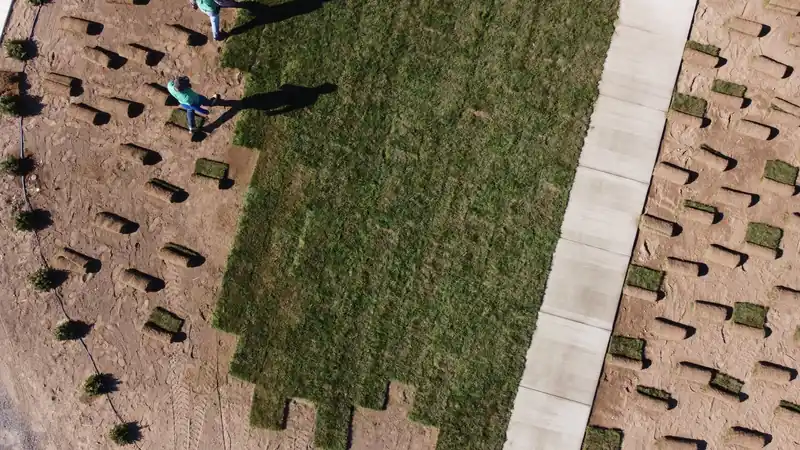
A lawn gets tired in stages. First the bare patches show up near the driveway. Then the weeds outnumber the grass, and the mower just chops everything to the same ragged height. At some point you stop patching and start asking what it would take to start over. For most yards, the answer is sod, and the part that decides how it turns out is everything that happens before the first roll comes off the truck.
Sod or seed: the short version
Seed is cheaper in materials and slower in every other way. It needs weeks of babysitting, it washes out on a slope, and it leaves you looking at dirt through a whole season. Sod gives you a finished lawn in a day. The tradeoff is that sod is unforgiving about the ground underneath it. Laid on a lumpy, compacted, root-filled surface, it will show every lump, and it will root badly.
Day one: removing what's there
The old turf has to go. Laying new sod over weeds and thin grass just puts a layer of fresh green on top of the same problems. A sod cutter slices the old lawn into strips that get rolled up and hauled off. Any thatch, rocks, and debris go with it. This is also the moment to look at what's underneath, because that's where the real decisions are.
The roots nobody sees
Laura L Nicholson hired First Choice Lawn Care to redo her front yard, and her description of the job is a good example. She wrote that the yard "was especially difficult to clear because it had a lot of large, old roots from a tree removal at some time." Buried roots and stump remnants are one of the most common reasons a new lawn goes lumpy. As the wood rots over a few years, the soil above it sinks, and a smooth lawn turns into a pocked one.
So the roots come out first. Then the soil gets graded. Grading means shaping the ground so water runs away from the house and doesn't pool in the low spots. It also means breaking up the compacted top layer so the new roots can actually push down. Nikki Cook, another customer, had "large bare spots that had been dirt pits for several years." Those spots are the same story: the ground had been packed and left alone until nothing could grow in it.
If a sprinkler system is going in, it goes in now, before any grass. Trenching through new sod is a mistake you only make once. Laura's job included grading, an underground system, and then the sod, in that order.
Laying the sod
Good sod gets laid the day it's delivered. Rolls left stacked in the sun heat up and start to die from the inside. The crew works from a straight edge, usually a sidewalk or driveway, and staggers the seams like bricks so water can't run along a single line and erode it. The pieces get pushed tight together with no gaps and no overlaps. Edges against curbs or beds get trimmed to fit with a knife, and the last step is rolling the whole lawn so the sod makes full contact with the soil. Air pockets under a roll are where roots fail to take.
The first weeks of watering
This is where most homeowners lose a good installation. New sod has no roots in your soil yet. It's sitting on top of it, living off whatever water it gets in the first days. Here's the rough shape of the early weeks.
- The first several days: water often and lightly enough that the sod and the top of the soil underneath stay damp the whole time. In dry valley summers that can mean more than once a day.
- Check by lifting a corner. If the soil under the sod is dry, the schedule needs to go up. If it's soggy and the sod feels spongy, back off.
- After the first week or two, the roots begin to grab. Water less often but longer, so moisture follows the roots down.
- Stay off it as much as you can until it resists a gentle tug. No mowing until then, and the first cut should take only the top of the blades.
Weather changes all of this. A hot, windy week can dry sod faster than a timer expects, and a cool, cloudy week can leave it wetter than you'd think. Looking at the lawn every day is part of the job.
What a good job feels like to the customer
Debbie Jorgensen had a new front lawn put in and wrote that the owner "was fast and responsive when submitting a quote" and that "the job was done on time and as promised." That's what you want from a sod project: a clear quote, a date, and a crew that shows up and does what was said.
First Choice Lawn Care Services, in Zillah, installs sod across the Yakima Valley, including the grading and irrigation that go with it. If you're staring at a tired lawn and wondering what a fresh start would involve, call (509) 699-3071 for a free estimate, available Monday through Saturday.
First Choice Lawn Care Services LLC, (509) 699-3071
Call (509) 699-3071More articles
When to Schedule a Sprinkler Blowout in the Yakima Valley
The blowout window is shorter than most people think, and the crews fill up fast once the forecast turns cold.
Keeping Grass Out of Your Garden Beds With Concrete Curbing and River Rock
If you spend every weekend pulling grass out of the beds, the problem is probably the edge, not you.