What Property Managers Should Settle Before the First Snowstorm
The worst time to figure out who plows the lot is at five in the morning with snow already down.
October 7, 2026 · 3 min read
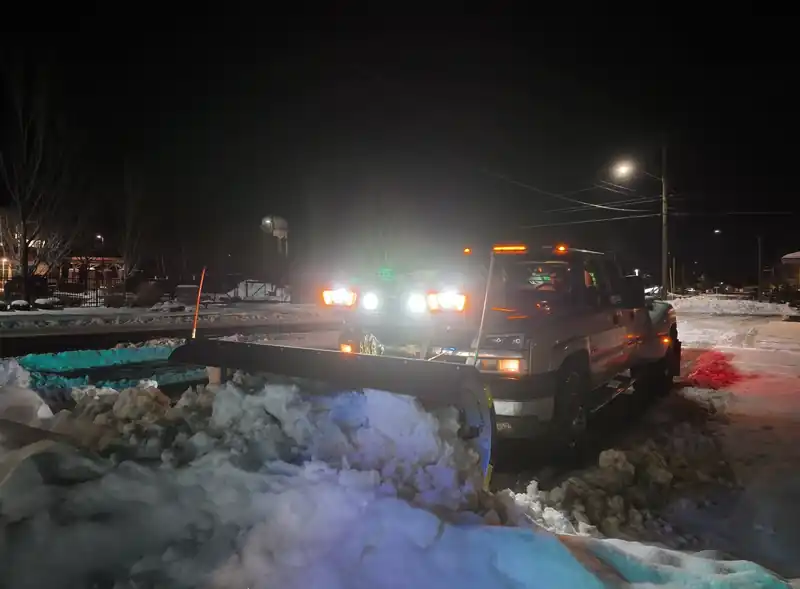
Most snow removal problems for a commercial property aren't equipment problems. They're planning problems. Nobody agreed on when to plow, nobody knew which lot belonged in which route, and a tenant's delivery truck got stuck at the one spot the crew had never been told about. All of that gets decided in October, or it gets decided badly in December.
Decide your trigger depth
The trigger is the snowfall depth that sends a plow out. Set it too low and you pay for visits that barely moved anything. Set it too high and customers are walking through slush while the contractor waits for the number. The right trigger depends on your property: a medical office with early patients needs a lower one than a storage yard. Put the number in writing, and also say what happens when snow keeps falling after the first pass.
Decide who has the authority to call an extra visit, too. A manager who has to check with three people before a plow can return to the lot loses an hour that matters. One person, with a phone number the contractor already has, makes the call.
Map the property with the contractor
Walk the property together before the season, in daylight, with a site plan if you have one. Mark the driveways, loading docks, accessible parking, fire lanes, and sidewalks. Find out where the snow will go. A plow clears pavement by pushing snow somewhere, and a pile that blocks sight lines at an exit, covers a drain, or buries a fire hydrant is a problem you created by not choosing a spot.
Point out the hazards too. Curbs and landscaping edges get hit by plow blades. Sprinkler heads and low bollards disappear under white. If your property has curbed beds, mention them. Contractors can only avoid what they've been told about.
Share tenant schedules as well. A lot with a morning shift needs to be clear before the first cars arrive, while a lot that sits empty overnight can be handled on a different timeline. Those details shape the route far more than most people expect, and they take ten minutes to explain.
Plowing and de-icing are two jobs
Plowing removes the snow. De-icing deals with what the blade leaves behind, the thin layer of packed snow and the ice that forms after a thaw and refreeze. Many commercial properties need both, and they happen at different times. Treating pavement before a storm can keep snow from bonding to the surface, which makes the plow's job easier. Treating after helps with whatever's left.
Ask what product the contractor uses and where. Some de-icers can be hard on new concrete and on the plants in beds along the walks. If you've recently poured or planted anything, say so.
Temperature changes the picture, too. On a very cold night some de-icers work slowly or not at all, and sand or a different product may be the better choice for traction. A contractor who has done this before will have an opinion. Ask for it.
Ask the questions that matter before you sign
- Who is your contact when it's snowing, and how do you reach them?
- What hours do you actually plow, and how do you handle a storm that runs for a day or two?
- Is de-icing in the contract, or billed separately?
- Who clears sidewalks and entrances, and who handles the places a truck can't reach?
- How do you keep records of when each visit happened?
Keep a record of every visit
When a tenant complains, an insurer asks questions, or a customer reports a slip, the first thing anyone wants to know is what was done and when. A simple log with the time of arrival, what was cleared, and what was applied is worth far more than anyone's memory. Ask your contractor to provide it, or keep your own with dated photos.
Don't wait for the first flake
Contractors are easiest to book before winter shows up. After the first storm, the people who didn't plan are all calling at once. A walk-through in October costs you an hour and saves the scramble.
First Choice Lawn Care Services lists snow removal and de-icing among its commercial services, alongside mowing, fertilizing, irrigation, and shrub trimming, so one contractor can look after a property year-round. The crew runs plow trucks and works commercial properties across the valley, from Yakima County to Kittitas County. Call (509) 699-3071 to set up a walk-through. Free estimates are available Monday through Saturday.
First Choice Lawn Care Services LLC, (509) 699-3071
Call (509) 699-3071More articles
When to Schedule a Sprinkler Blowout in the Yakima Valley
The blowout window is shorter than most people think, and the crews fill up fast once the forecast turns cold.
Replacing a Tired Lawn With Sod, From Bare Dirt to First Mowing
Fresh sod looks great on day one. What decides whether it still looks great in August is the work nobody photographs.